
Last updated September 10, 2026
Level 1 sweep and inspection to the NFPA 211 annual standard - flue, crown, cap, and flashing checked and photographed
Chimney sweep logs do not sweep chimneys. They loosen some creosote - which then falls where a brush and vacuum still have to collect it.
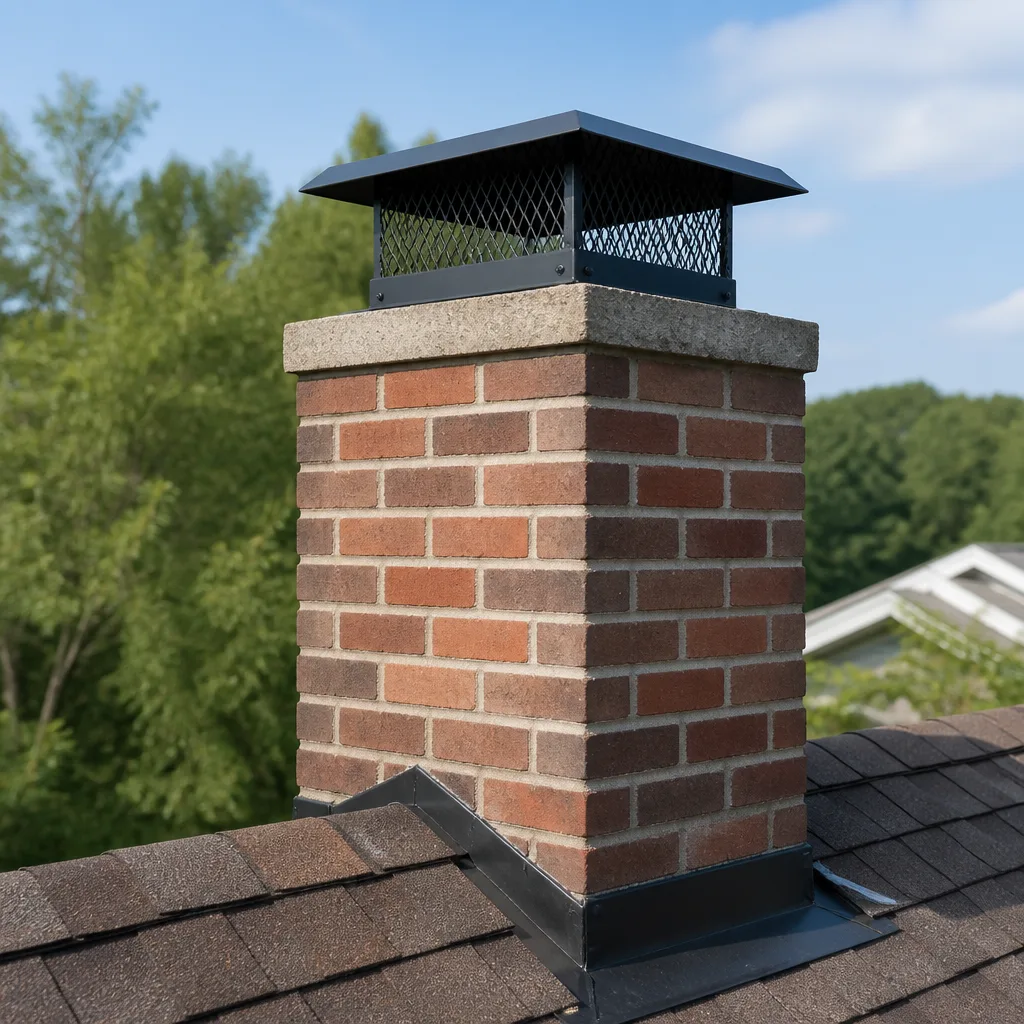
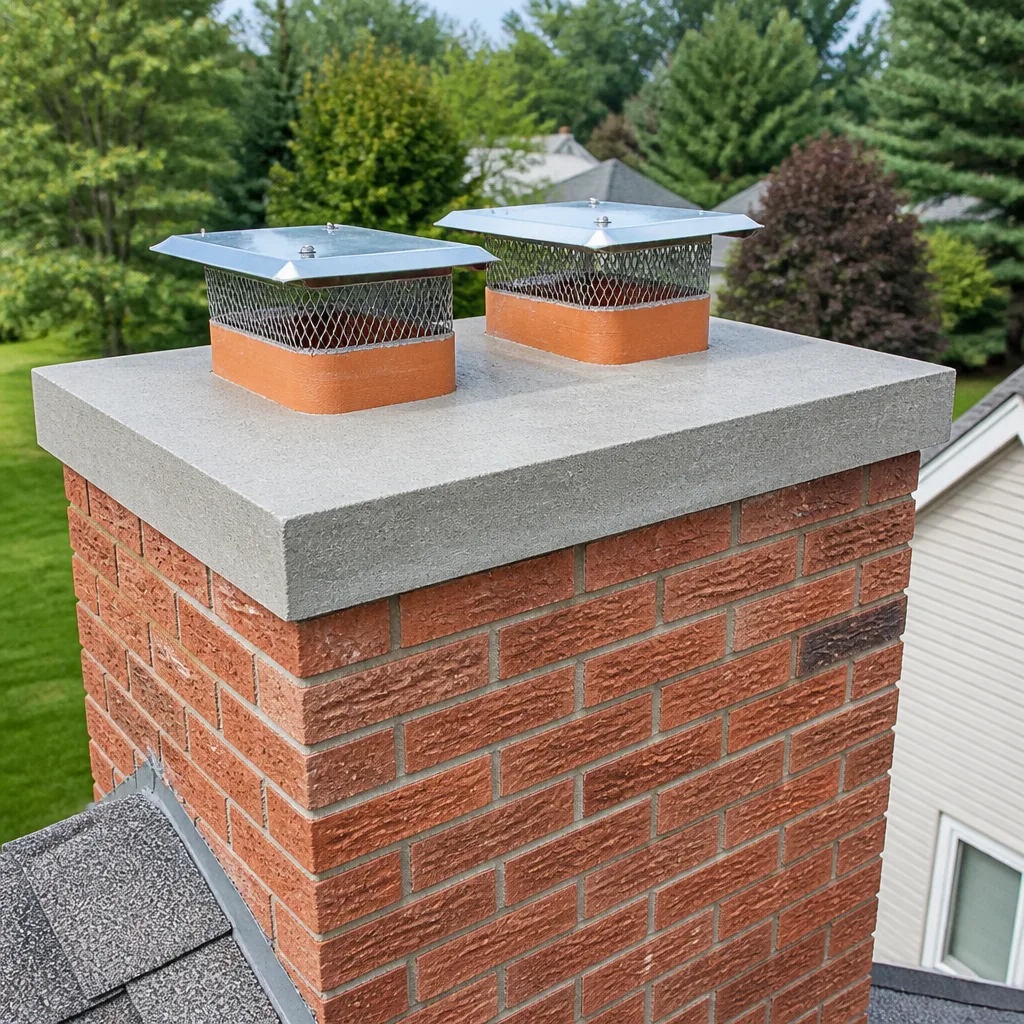
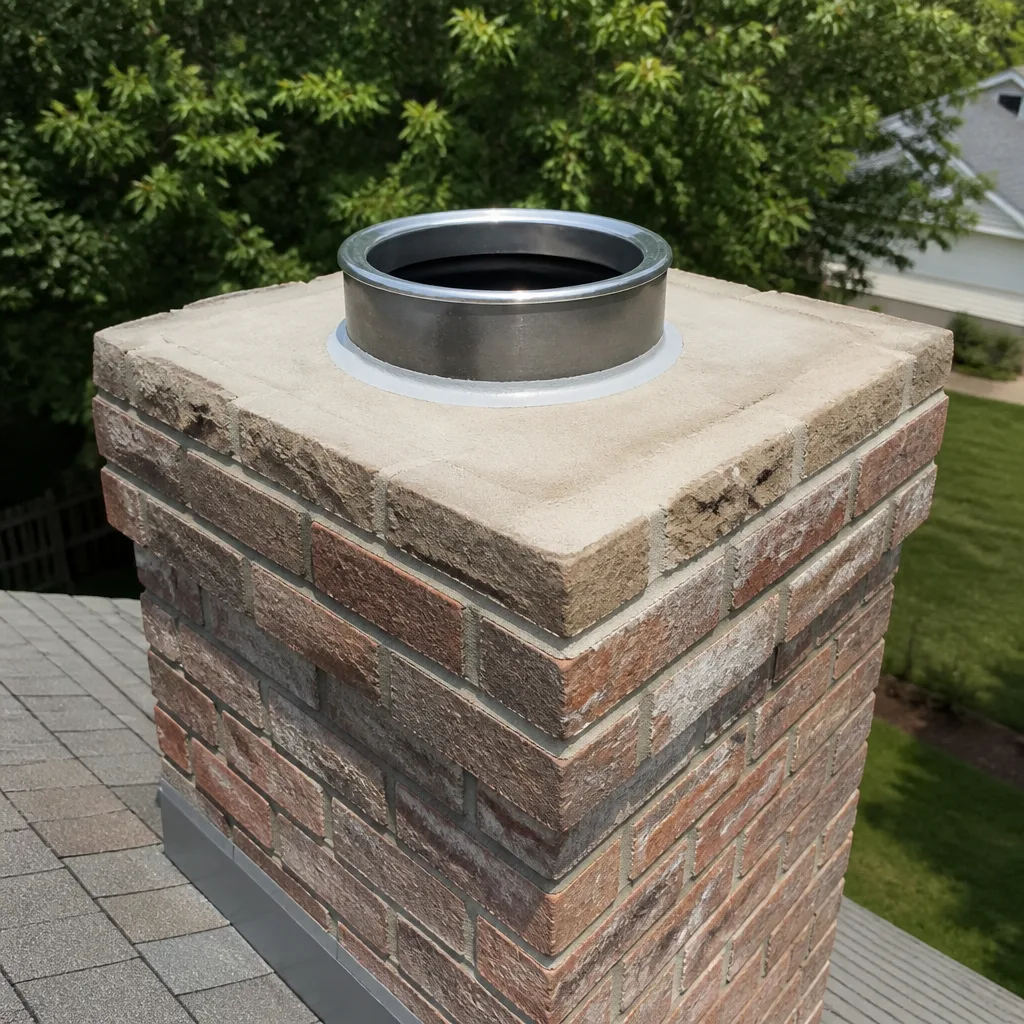
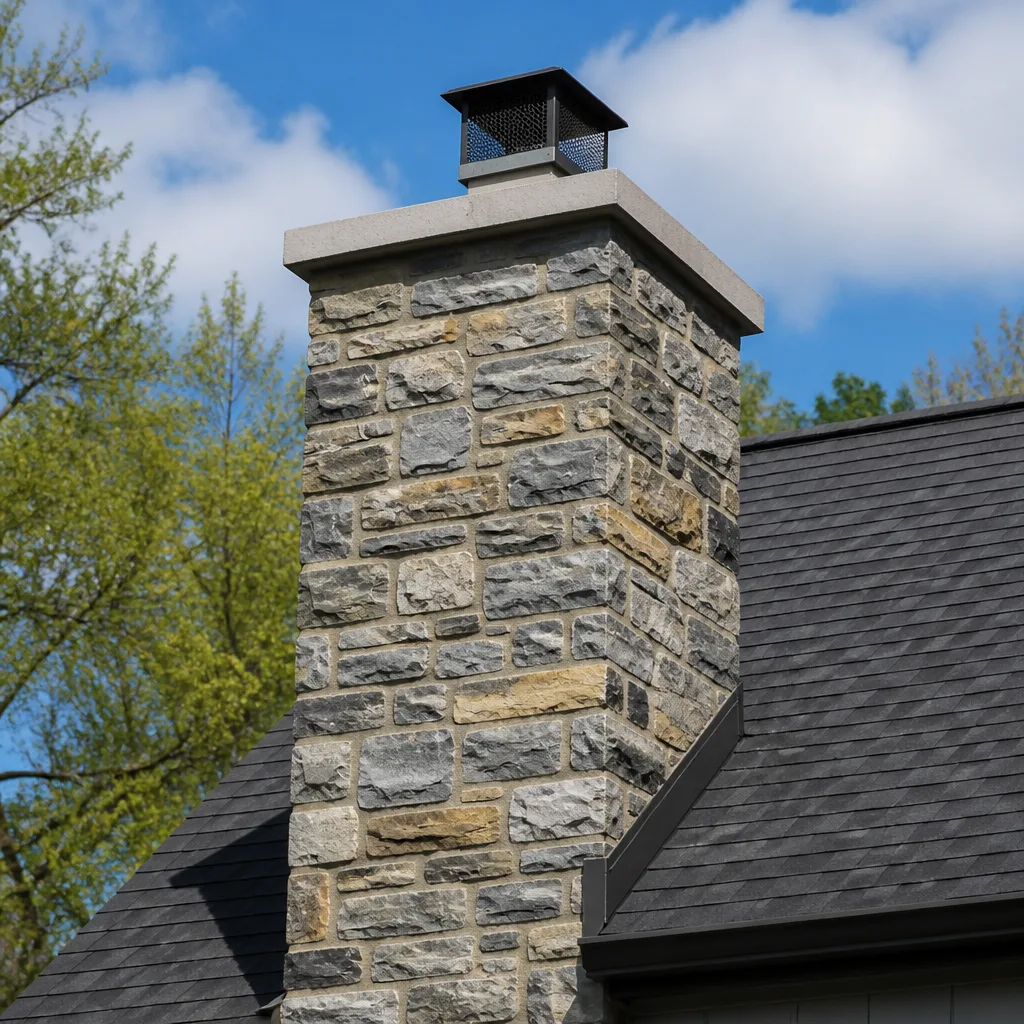
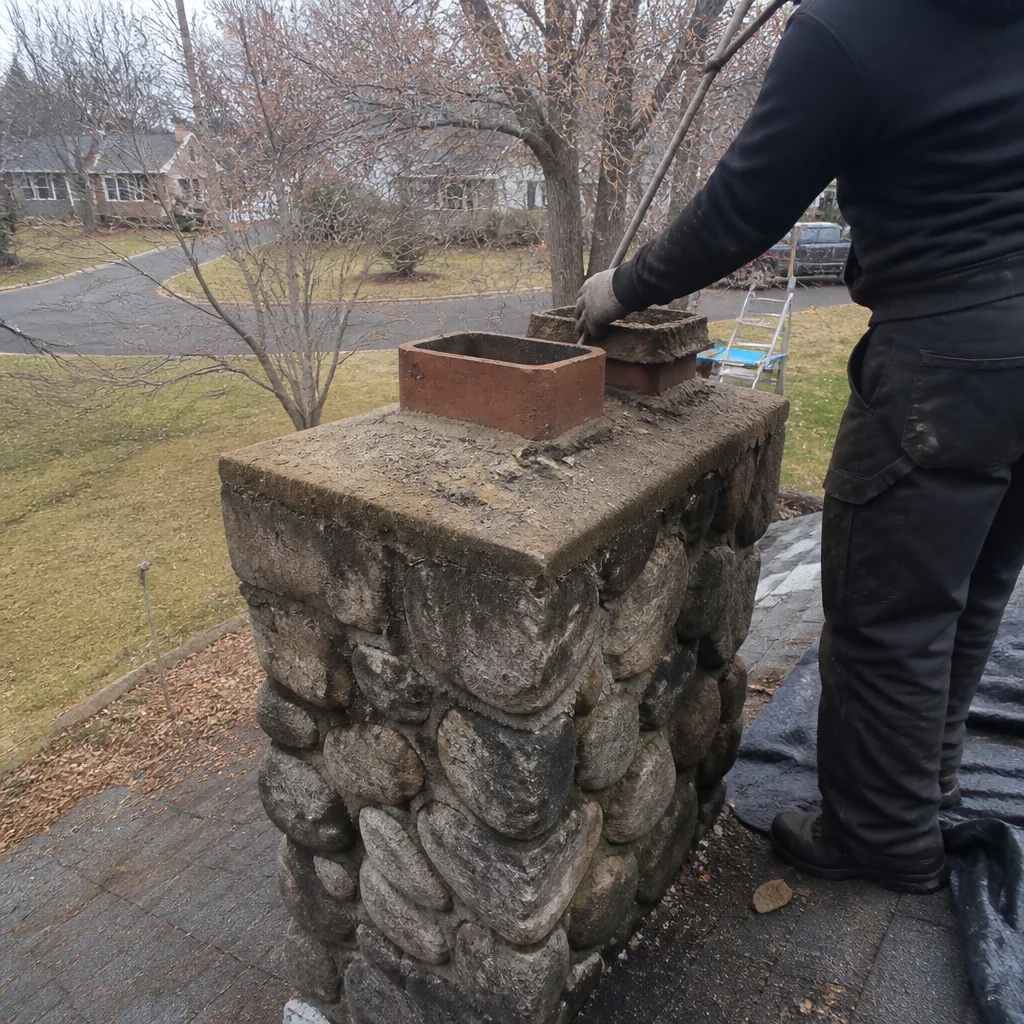 Before
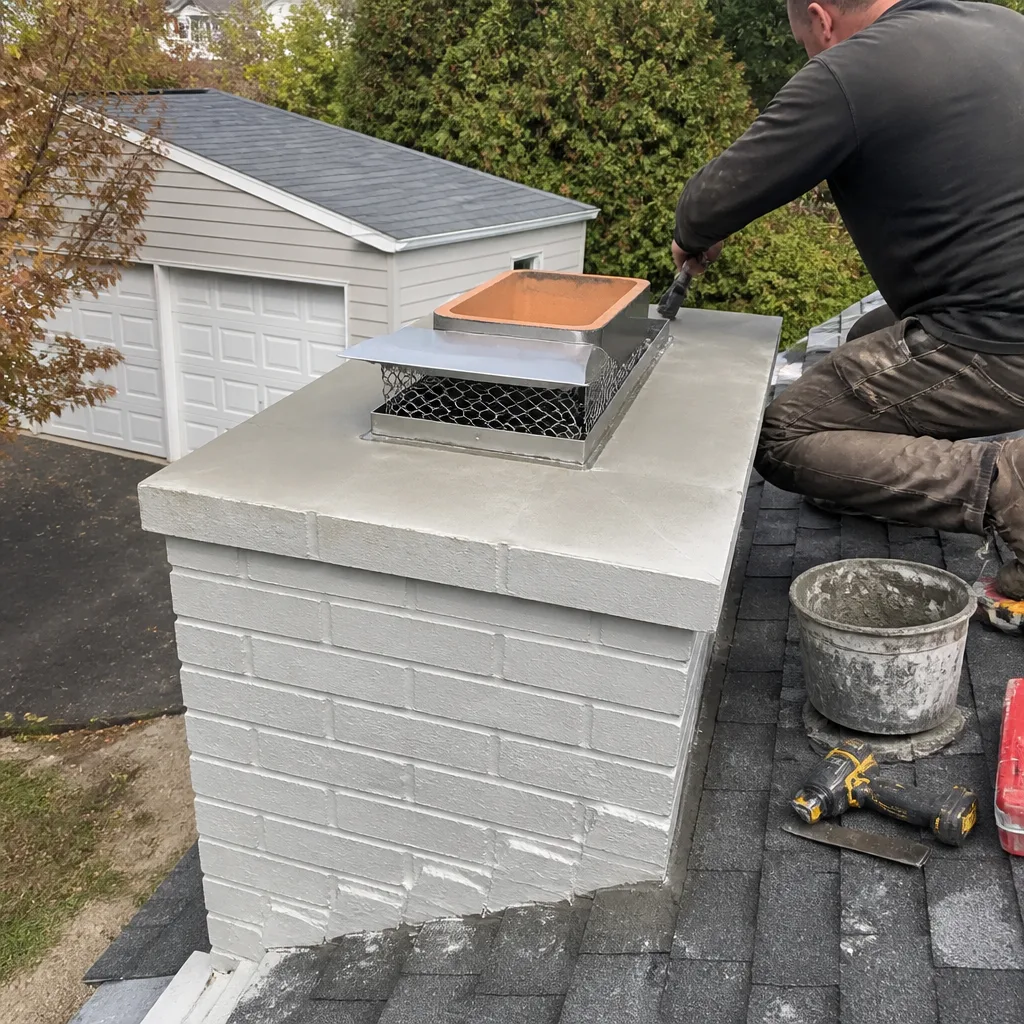 After
After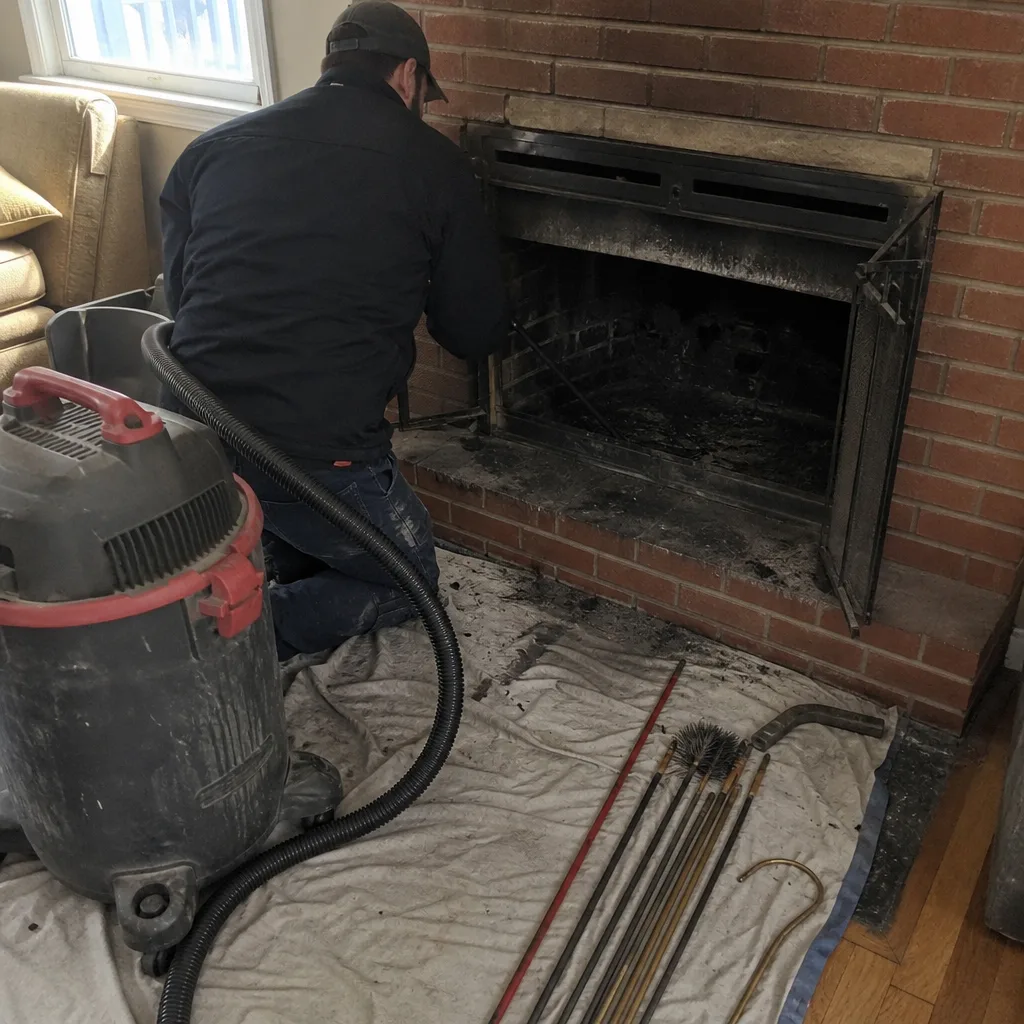 Before
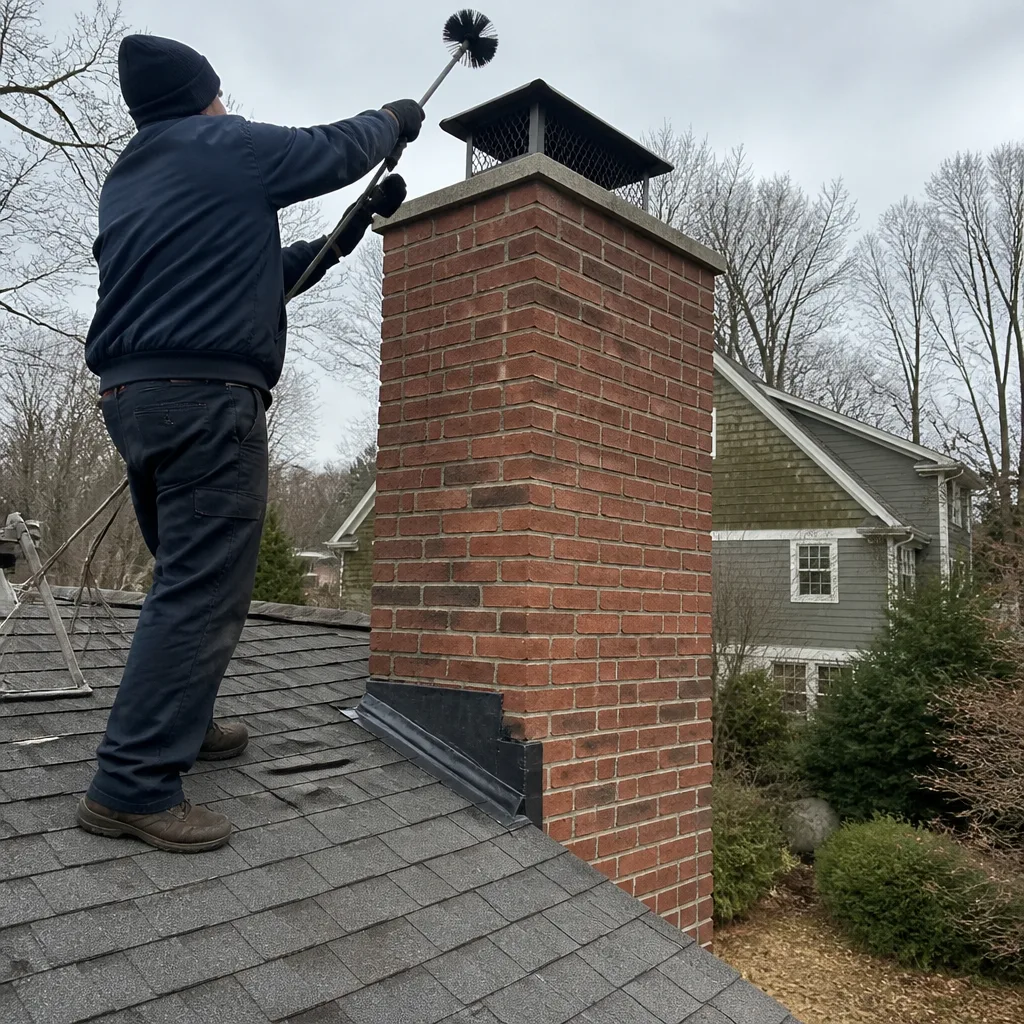 After
After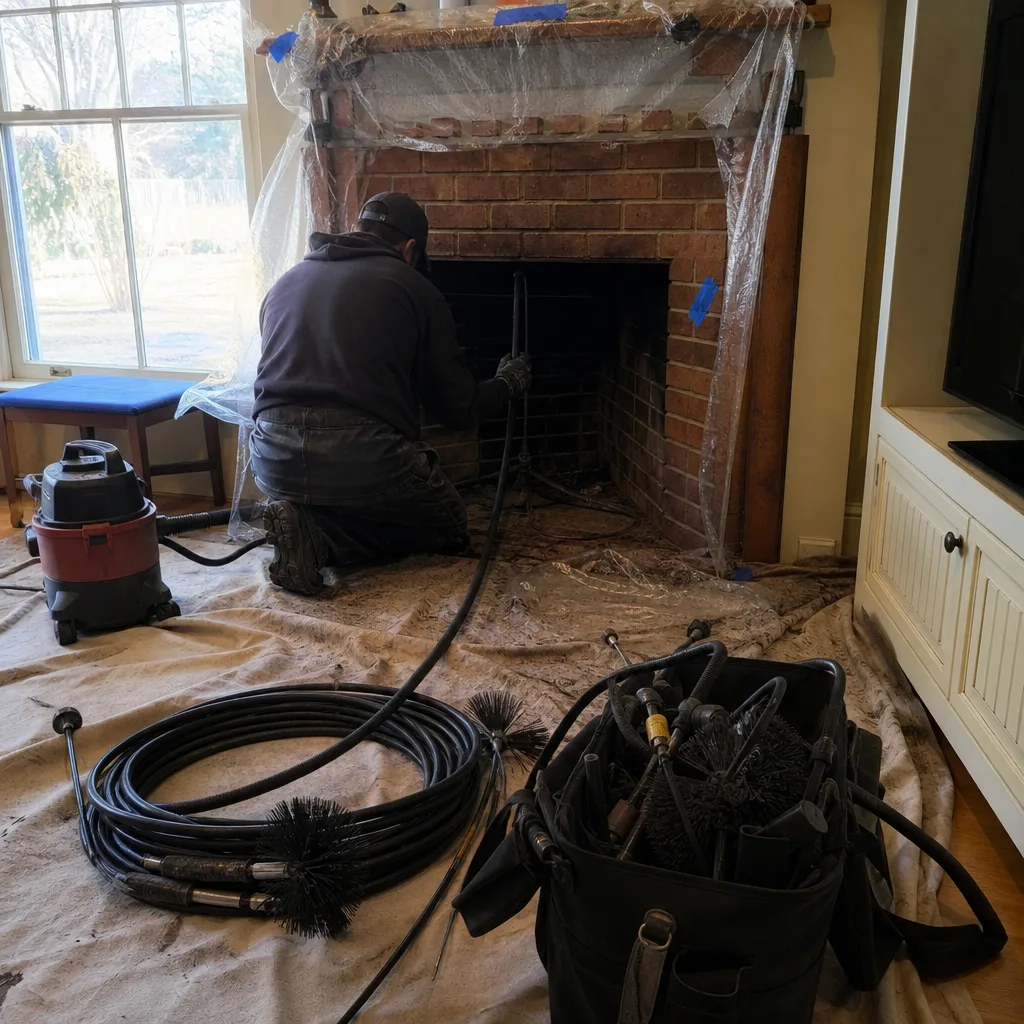 Before
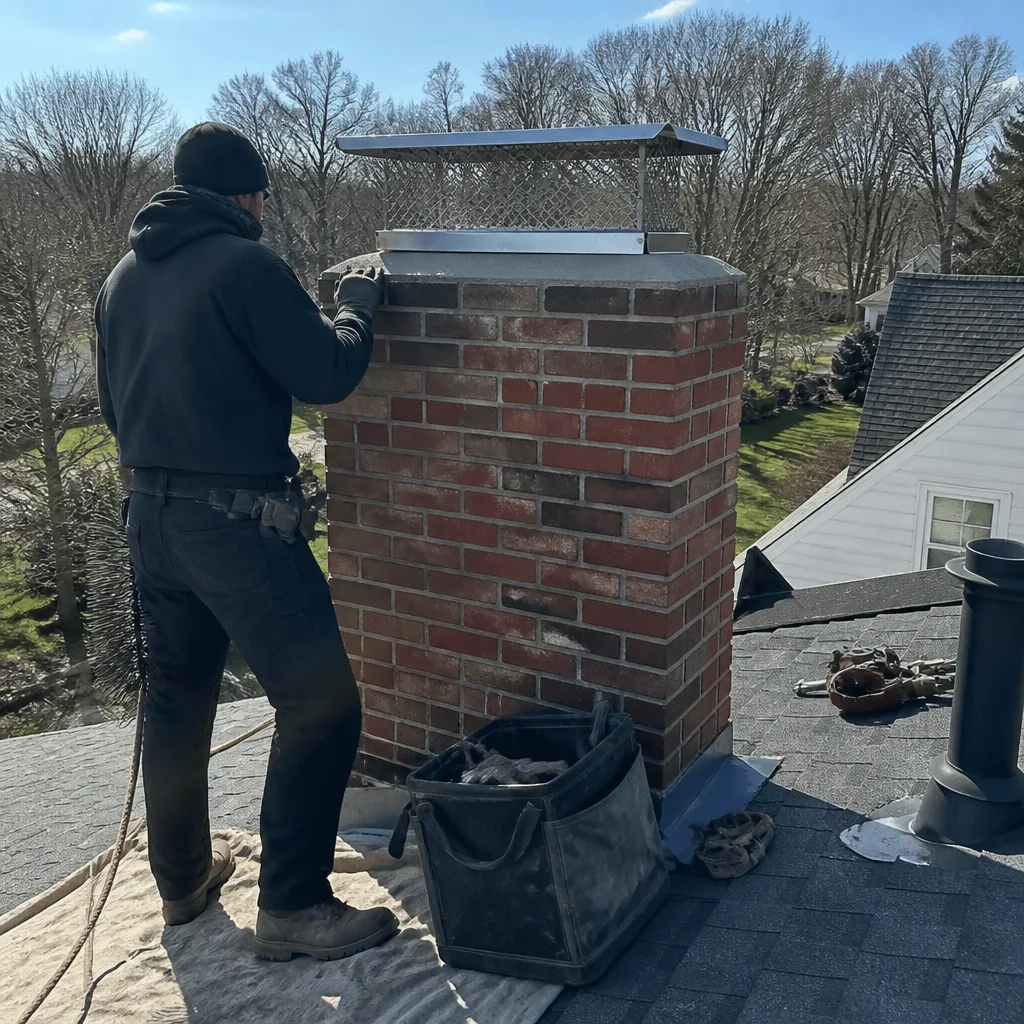 After
AfterSeasonal Chimney Cleaning Care for West Hartford: Year-Round Homeowner’s Guide
The worst time to discover a cracked flue tile is November, when cleaning crews are booked three weeks out and the first hard freeze is already forecast. The homeowners who avoid that problem scheduled their sweep in August. In West Hartford, our four hard seasons don’t just change what you burn - they change what your chimney accumulates, what the masonry endures, and what inspection should catch before each transition. This guide treats chimney care as a calendar discipline, not a once-a-year errand. You’ll learn why timing matters more than frequency, how freeze-thaw cycles attack mortar differently than summer humidity, and how to build a year-round log that makes every inspection faster and more useful because it builds on what came before.
Quick Answer
Seasonal chimney care in West Hartford means four distinct maintenance windows: pre-season cleaning and Level-2 camera inspection in August-September before heating demand peaks; winter monitoring for ice dam stress and crown cracking during freeze-thaw cycles; spring assessment for moisture intrusion and animal nesting after the burning season ends; and summer masonry evaluation for efflorescence and cap integrity before humidity peaks. A documented year-round log, updated each season, turns scattered repairs into predictable maintenance and catches problems when they’re small enough to fix in a single visit.
Table of Contents
- Why August-September Is the Optimal Cleaning Window in West Hartford
- How Winter Freeze-Thaw Cycles Attack Your Chimney
- Spring Tasks After Heating Season Ends
- What Summer Humidity Does to Masonry
- Building Your Year-Round Chimney Log
- What Seasonal Care Costs in West Hartford
- Common Mistakes to Avoid
- When to Call a Professional
- Frequently Asked Questions
Why August-September Is the Optimal Cleaning Window in West Hartford
West Hartford homeowners who burn wood regularly should book their chimney sweep before Labor Day. Here’s why: our crews have open calendars, the weather allows full exterior access without ice or leaf debris complicating the roof work, and any repair found during inspection can be scheduled and completed before the first fire of the season.
The pre-season window in West Hartford carries specific advantages our competitors rarely mention. First, the chimney cleaning and sweep removes creosote that accumulated during the previous burning season before it hardens further in summer heat. Fresh, flaky creosote sweeps out cleanly. Left to age, it glaze-hardens into a tar-like coating that requires more aggressive removal methods.
Second, August humidity levels in central Connecticut typically drop enough that moisture readings in masonry give accurate baselines. A damp chimney in August signals active intrusion, not seasonal condensation. We document these readings with photos so the spring comparison tells a clear story.
Third, supply chains for professional-grade materials from DuraFlex and HeatShield move faster before the fall rush. If your inspection reveals a compromised flue liner or deteriorated crown coating, we can source materials and complete the repair without delaying your first fire.
What specifically should be checked before that first fire:
- Level-2 camera inspection of the flue interior. In West Hartford’s older homes, especially in the Elmwood and Park Road neighborhoods built in the 1920s-1950s, clay flue tiles often show diagonal cracking from decades of thermal cycling. Camera documentation lets you see exactly what we see.
- Crown condition and seal integrity. A cracked crown in September becomes a water entry point by November. We check for proper overhang, sealant adhesion, and whether the crown slopes shed water or pool it.
- Cap and spark arrestor function. Missing or corroded caps invite animals and debris. In West Hartford, we’ve found squirrel nests, starling colonies, and once a full raccoon litter above the smoke chamber.
- Firebox and damper operation. The damper should seal tightly when closed and open fully without binding. A sticky damper in September becomes a smoke-filled living room in January.
- Exterior masonry assessment. We photograph every elevation for comparison, noting spalling brick, deteriorated mortar joints, and any lean or bulge that suggests structural movement.
The homeowners who avoid November emergencies are the ones who treated August as part of their heating season preparation, not an afterthought.
How Winter Freeze-Thaw Cycles Attack Your Chimney
Between November and March, West Hartford typically sees 25-35 freeze-thaw cycles where temperatures swing across 32°F within 24 hours. Each cycle is a small expansion-contraction event in every pore of your masonry. The damage is cumulative, invisible from the ground, and often worse on the north and east exposures where sun doesn’t reach to dry the brick quickly.
Here’s the mechanism: moisture enters masonry through capillary action, crown cracks, or failed flashing. When it freezes, water expands roughly 9% in volume. That expansion exerts pressure from inside the brick or mortar joint. When it thaws, the material doesn’t fully rebound. After enough cycles, the face of the brick spalls off, mortar joints grind to powder, and the structural shell weakens.
Visual inspection alone misses the critical early stage. A brick can look sound while its interior pore structure is compromised. We use moisture meters and thermal imaging during winter assessments to find the wet spots that haven’t visibly failed yet. In the Buena Vista and West Hill areas, where wind exposure is higher, we’ve documented accelerated deterioration on chimneys without proper crown overhang or water-repellent treatment.
What winter monitoring should include:
- Post-storm exterior check after every significant ice or snow event. Look for new staining on interior walls near the chimney breast, which signals flashing failure under ice dam loading.
- Monitoring for efflorescence bloom on exterior brick. White powder appearing in winter means active moisture movement - the freeze-thaw damage is already occurring.
- Listening for changed draft behavior. A chimney that suddenly smokes back or struggles to draw may indicate partial blockage from ice formation at the cap or exterior mortar debris that fell into the flue.
- Checking attic spaces for condensation or staining. Warm, moist chimney gases leaking through deteriorated mortar can condense on cold roof sheathing, creating mold conditions invisible from living spaces.
The crown coating is your first line of defense. Professional-grade materials from Gelco and Olympia Chimney, properly applied with correct thickness and overhang specifications, flex slightly and shed water before it enters the masonry matrix. Cheap crown coatings crack in the first winter. We’ve replaced dozens of them in West Hartford homes where the previous application was essentially decorative.
One specific local factor: our proximity to the Farmington River valley means some neighborhoods, particularly near Trout Brook and the eastern ridge lines, experience more frequent fog and ground-hugging moisture. Chimneys in these microclimates need more aggressive water-repellent treatment and more frequent crown inspection.
Spring Tasks After Heating Season Ends
When the last fire burns out in March or April, most homeowners close the damper and forget the chimney exists until October. This is the single biggest missed opportunity in year-round chimney care. Spring assessment catches the damage that winter inflicted while it’s still fresh and documented, and it addresses problems that worsen dramatically if left through summer humidity.
The three critical spring tasks are moisture intrusion assessment, animal nesting inspection, and cap integrity verification after winter ice loading.
Moisture intrusion assessment. Spring rains in West Hartford are typically steady and prolonged, not the brief thunderstorms of summer. This sustained wetting tests every weakness winter opened. We inspect with the same Level-2 camera system used in fall, but now we’re looking for water marks, rust streaks on metal components, and softened mortar that wasn’t visible before the heating season started. The comparison to our fall photos tells us whether a condition is stable or progressive.
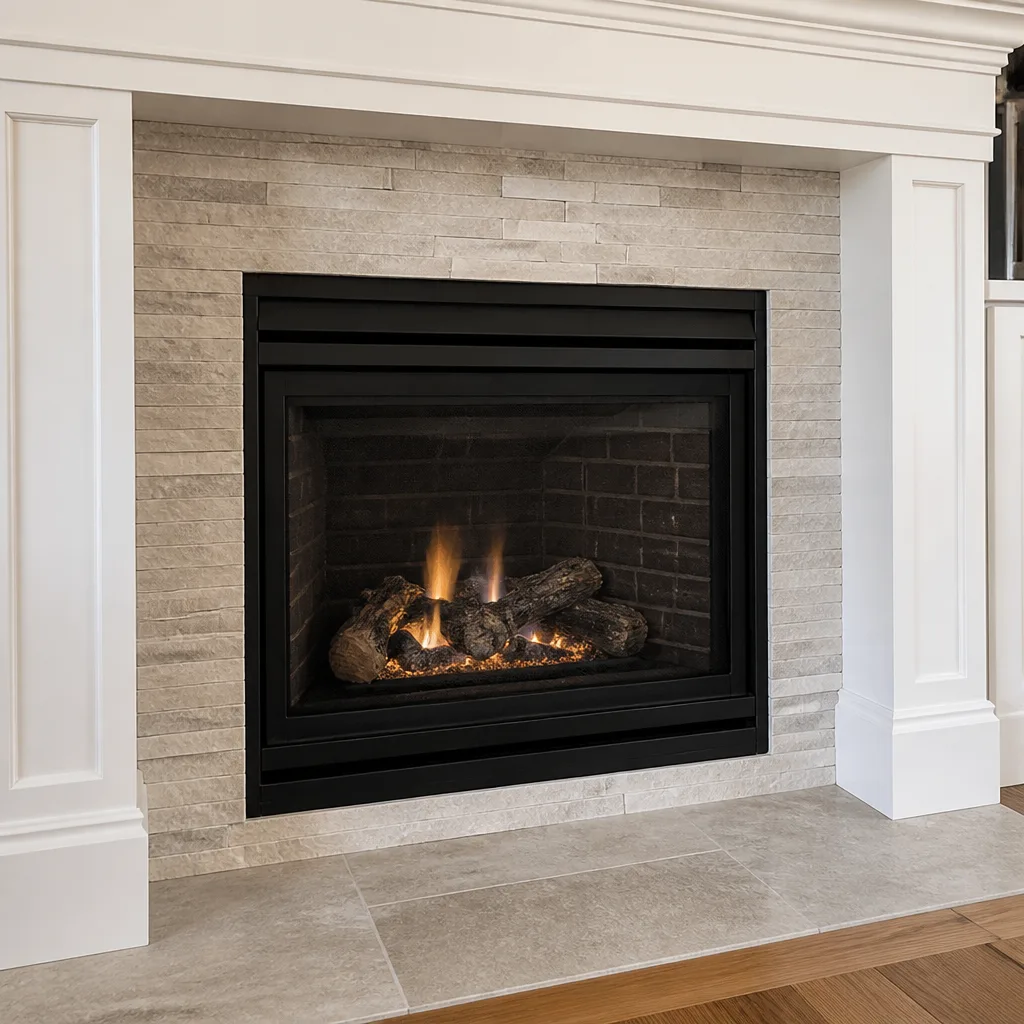
In homes with fireplace services that include gas log sets, spring is when we check for corrosion on the burner assembly and valve train. The combination of combustion moisture and spring humidity accelerates rust on components that must seal precisely for safe operation.
Animal nesting inspection. March through May is primary nesting season for squirrels, raccoons, and chimney swifts in central Connecticut. A cap that survived winter intact may have been breached by ice impact or by animals determined to access the warmth of the flue. We document cap condition with photos and check for nesting material, droppings, or carcasses that obstruct draft and create odor problems when summer humidity activates them.
Cap integrity after winter ice loading. Ice doesn’t just fall straight down. It slides, rotates, and impacts with surprising force. We’ve replaced caps in West Hartford that were dented, detached, or driven down into the flue opening by ice shedding from higher roof pitches. Spring inspection catches this before the first nesting attempt makes it worse.
Spring is also the optimal window for masonry repairs that require curing in moderate temperatures. Tuckpointing, crown reconstruction, and water-repellent application all need dry conditions and temperatures consistently above 50°F for proper bond development. Scheduling these in April or May means they’re fully cured before summer humidity and fully tested before next winter.
What Summer Humidity Does to Masonry
July and August in West Hartford bring relative humidity that routinely exceeds 75% for days at a stretch. This isn’t just uncomfortable for homeowners. It’s actively damaging to chimney masonry that already contains moisture from spring rains or winter freeze-thaw infiltration.
The white staining you may notice on exterior brick during humid months is efflorescence: mineral salts dissolved by moisture and deposited on the surface as water evaporates. It’s not merely cosmetic. Efflorescence signals that water is moving through the masonry matrix, carrying dissolved salts that weaken the binder structure. Heavy, recurring efflorescence indicates chronic moisture intrusion that will accelerate deterioration and can eventually cause structural spalling.
What the location of efflorescence tells us:
- At the base of the chimney: Likely ground moisture wicking upward, or failed base flashing where the chimney meets the roof deck.
- On the chimney breast above the roofline: Crown failure or cap absence allowing direct water entry, or deteriorated mortar joints at the shoulder.
- On interior fireplace walls: Active flue gas condensation or exterior moisture migrating through the masonry mass, often combined with inadequate chimney ventilation.
- Localized to one face: Point-source leak from a specific failed joint, crack, or flashing detail on that exposure.
Summer humidity also affects metal components. Stainless steel liners from quality manufacturers like DuraFlex resist corrosion, but cheaper alloys or improper gauge selection can show surface rust in humid conditions if any combustion moisture remains in the flue. We verify liner condition during summer inspections with camera documentation.
The summer evaluation should also assess whether the chimney’s thermal mass is properly isolated from conditioned interior spaces. In West Hartford’s older homes with balloon framing, the chimney chase often communicates directly with wall cavities. Summer humidity in these cavities, combined with air conditioning that cools interior surfaces, creates condensation conditions that mimic roof leaks. We’ve traced “mystery” water stains to this mechanism in homes throughout the West End and Noah Webster neighborhoods.
Professional-grade water-repellent treatments, applied when masonry is dry and temperatures are moderate, create a breathable barrier that reduces liquid water absorption while allowing vapor transmission. We specify treatments from trusted manufacturers and apply them according to substrate-specific guidelines - never the generic spray-and-walk-away approach.
Building Your Year-Round Chimney Log
A documented log transforms chimney maintenance from reactive panic to predictable discipline. The homeowners who never face November emergencies are the ones who can open a file and see exactly what their chimney looked like last spring, what was repaired, and what was flagged for monitoring.
We provide every West Hartford client with a photo-documented inspection report, but the year-round log is your own running record that connects professional visits to your own observations. Here’s how to build one that actually helps:
- Start with a baseline condition report. If you’ve never had a Level-2 inspection, schedule one. The photos and written assessment become Page 1 of your log. Note the date, technician, and any immediate recommendations.
- Create four seasonal entry templates. Each entry should record: date, weather conditions, what you burned and how frequently, any observed changes in draft or smoke behavior, exterior visual notes from ground level, and interior observations (odors, stains, damper function).
- Attach photos to every entry. Smartphone photos of the exterior, the firebox, and any visible changes create a time series that’s invaluable for comparison. Date-stamp them.
- Record professional visit outcomes. When Hearthstone Chimney Co. or any other professional visits, file their report with your own notes on what was discussed, what was done, and what was recommended for follow-up.
- Build the comparison habit. Before each new professional inspection, review the previous entry. Ask specifically about any condition that was flagged for monitoring. This keeps small problems from becoming the “we meant to get to that” disasters.
The power of this log compounds over time. After three years, you’ll see patterns: whether your crown coating deteriorates on a predictable cycle, whether certain weather conditions consistently precede problems, whether your burning habits correlate with creosote accumulation rates. This data makes every inspection faster because the technician starts with context, not a blank slate.
We’ve seen this log system prevent thousands in unnecessary repairs. A homeowner in the Fernwood area brought three years of entries to an inspection and pointed out efflorescence that appeared each July on the north face. The pattern directed us to a specific flashing detail that was the true source - a $340 repair, not the $2,800 liner replacement another company had proposed based on a single, context-free inspection.
What Seasonal Care Costs in West Hartford
Predictable maintenance costs less than emergency repairs. For a detailed breakdown, see our Chimney Cleaning Cost Breakdown: The West Hartford Homeowner’s Reference for 2026. Here’s what West Hartford homeowners should expect for seasonal chimney care, based on our local market experience:
| Service | Typical Range | Best Scheduling Window |
|---|---|---|
| Standard chimney sweep and Level-1 inspection | $200-$280 | August-September |
| Level-2 camera inspection with photo report | $280-$380 | Pre-season or post-season |
| Crown coating repair (professional-grade) | $450-$850 | Spring or early fall |
| Cap replacement (stainless steel) | $280-$550 | Any season |
| Tuckpointing (per square foot) | $18-$28 | Spring or fall |
| Water-repellent treatment | $380-$650 | Spring or summer |
| Flue liner evaluation/repair | $850-$2,400+ | Pre-season essential |
Our $89 Seasonal Tune-Up, available year-round, includes sweep, basic inspection, and damper adjustment - a solid entry point for homeowners establishing their maintenance discipline. For repairs over $250, we offer $50 off. Seniors and veterans receive a permanent 5% discount on all services.
The real cost comparison isn’t service against service. It’s scheduled maintenance against emergency response. A cracked flue discovered in August is a repair we can quote, schedule, and complete properly. The same crack discovered on the first cold night in November, with smoke backing up into the house and the fire department called, involves after-hours rates, temporary heating costs, and the stress of a household emergency.
We provide no-hassle upfront pricing. The number on the estimate is the number on the invoice. For any repair recommendation, we show you the camera photos and explain what you’re seeing in plain English before you decide.
Common Mistakes to Avoid
- Waiting for visible smoke problems before calling. By the time smoke backs up into your West Hartford living room, the flue obstruction or damage is advanced. Annual inspection catches conditions before they reach this stage.
- Assuming gas fireplaces need no chimney maintenance. Gas combustion produces water vapor and acidic condensate that deteriorates liners and masonry. The chimney repair needs differ from wood-burning systems, but neglect is equally damaging.
- Accepting a “sweep only” visit without inspection documentation. A sweep that doesn’t include photographed condition assessment leaves you with clean flue walls and no information about what happens next. Demand the photo report.
- Ignoring summer efflorescence as “just salt stains.” That white powder is your chimney telling you water is moving through the masonry matrix. Left unaddressed, it progresses to spalling, structural weakening, and interior water damage.
- Hiring based on lowest price without verifying insurance and references. West Hartford requires proper licensing for chimney work, and legitimate carries carry both liability and workers’ compensation coverage. The lowest bid often reflects corners cut on both.
- Skipping spring assessment because “we just had it checked in fall.” Fall inspection evaluates pre-season readiness. Spring assessment evaluates what winter actually did. Both are necessary for complete understanding.
- Using DIY crown sealants from hardware stores. These products rarely achieve proper film thickness or flexibility for our freeze-thaw cycle count. Professional-grade crown coatings from HeatShield and similar manufacturers are formulated for New England conditions.
When to Call a Professional
Call for immediate assessment if you notice smoke entering your living space, a strong odor of creosote or decay, visible cracks in the firebox or exterior masonry, or any leaning or separation of the chimney from the house. These conditions can indicate active safety hazards including carbon monoxide leakage risk or structural instability.
Schedule professional evaluation if your last inspection exceeds 12 months, if you’ve changed your fuel type or burning habits, if you’ve experienced a chimney fire (even a small one), or if you’re purchasing a home and need documented condition for negotiation.
Hearthstone Chimney Co. offers free estimates in West Hartford, and you can find more guides & resources on our blog. A live person answers every call, 24 hours a day, 7 days a week - not a voicemail, not a callback queue. Our background-checked, uniformed technicians complete most jobs in a single visit, and every recommendation comes with photos you can see and a plain-English verdict. Call (860) 743-1516 to schedule.
Frequently Asked Questions
A standard chimney sweep with Level-1 inspection in West Hartford typically runs $200-$280, while a Level-2 camera inspection with photo documentation ranges from $280-$380. Our $89 Seasonal Tune-Up offers a lower entry point for homeowners starting their maintenance program. Call (860) 743-1516 for an exact quote - estimates are free.
The National Fire Protection Association recommends annual inspection for all chimneys, with sweeping frequency depending on use. In West Hartford, wood-burning fireplaces used regularly during heating season typically need sweeping once yearly, while oil or gas systems may extend to every two years if inspection shows minimal accumulation. The specific schedule depends on your fuel, appliance efficiency, and burning habits - which is why documented annual inspection matters more than a rigid calendar rule.
Many liners flagged for replacement can be relined or repaired with stainless steel inserts from DuraFlex or resurfacing systems like HeatShield. We never recommend replacement without camera evidence you can see yourself, and we’ll plainly tell you when a condition can be safely monitored rather than immediately addressed. The right solution depends on liner material, damage location and extent, and your appliance type - not a one-size-fits-all recommendation.
Skipped maintenance allows creosote accumulation that increases chimney fire risk, permits moisture intrusion that progressively destroys masonry from inside, and lets small cracks in flue tiles expand until they require full liner replacement rather than spot repair. In West Hartford’s climate, we’ve seen three years of neglect turn $400 maintenance into $3,000+ reconstruction. The cost escalation isn’t linear - it’s exponential once water and freeze-thaw cycles gain footholds.
Summer chimney odor typically comes from one of three sources: animal nesting or carcass decomposition in the flue, creosote deposits activated by humidity and rising temperatures, or negative air pressure in your house drawing odors down through the chimney. A spring inspection identifies which cause applies and addresses it before peak humidity. Cap installation, proper damper sealing, and sometimes household ventilation correction eliminate most summer odor problems.
Homeowners can and should perform regular visual checks from ground level and note changes in draft or odor. However, flue interior evaluation requires specialized camera equipment, and roof-level assessment involves fall risk that makes DIY approach inadvisable for most homeowners. We recommend professional Level-2 inspection annually, with your own observations documented between visits. Call (860) 743-1516 to schedule - estimates are free.
The Bottom Line
West Hartford’s four-season climate demands four-season chimney attention. The homeowners who avoid emergencies and unnecessary costs treat chimney care as a calendar discipline: pre-season cleaning and camera inspection in August-September, winter monitoring for freeze-thaw damage, spring assessment for moisture and nesting issues, and summer evaluation for efflorescence and masonry integrity. A documented year-round log connects these observations into actionable knowledge, turning scattered repairs into predictable maintenance. The investment is modest - a few hundred dollars annually in scheduled care versus thousands in reactive reconstruction. Done right, and we stand behind it.
Written by Russell Haines, Owner at Hearthstone Chimney Co., serving West Hartford since 2014.